Wednesday, May 30, 2007

New Standard of Care for Robot-Assisted Therapy

HealthSouth Corporation (NYSE: HLS) and Motorika Ltd. announced today that the companies have signed an agreement to advance the application of robot technology in HealthSouth's inpatient rehabilitation hospitals.

Under the terms of the worldwide agreement, Motorika will have the exclusive license to market and sell the AutoAmbulator®, HealthSouth's robot-assisted gait therapy system and Healthsouth hospitals will install Motrika's Reo(TM) Go platform for robot- assisted arm therapy in at least 25 of its hospitals.

Motrika will also take over the manufacture, design, installation, maintenance, technical support, training and distribution of the AutoAmbulator.

"This agreement is a defining moment in applying robotic technology to benefit patients receiving therapy for neurological conditions," said Omer Einav, Motorika's founder and chief operating officer. "HealthSouth and Motorika will create a new standard of care for neurological patients, with an integrated full body solution that enables precise levels of functionally- oriented therapy to deliver better patient outcomes."

Part of the agreement also includes collaboration on the development of rehabiliataion robots for home use.

The AutoAmbulator® is a robot-assistance machine that allows patients with neurological conditions such as stroke, multiple sclerosis and spinal cord injury to replicate a normal walking pattern on a treadmill in a safe, efficient manner.

Reo Go(TM) is a robotic guide and modular handle, with software to customize exercise patterns and measure performance, to enhance and support the patient upper body rehabilitaion.

HealthSouth and Motorika Announce Agreement to Create New Standard of Care for Robot-Assisted Therapy: Financial News - Yahoo! Finance

Labels: , ,

Tuesday, February 27, 2007

Hospital Helpers Track Equipment

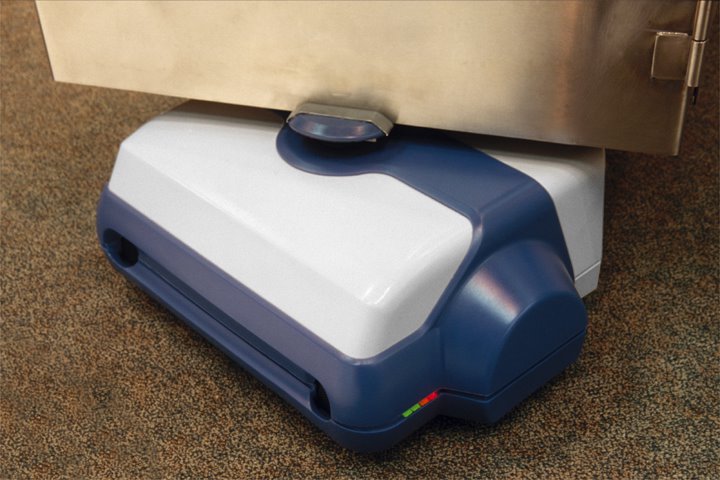
A new robot team from Aethon Inc. of Pittsburg, Pennsylvania is designed to track and deliver equipment around a hospital.

The TUG robot is in used successfully in many hospitals already - deliverng samples and medication. Now with a new partner, HOMER, and RFID tags on the equiptment, they work together to keep things in order.

HOMER roams the hospital searching for loose equipment like wheelchairs, beds, IV pumps. It identifies each unit by pinging for the RFID tags.
In the meantime a TUG can be chasing down the assets and returning them to where they will be needed or retrieving them on call.

Aethon expects that hospitals will need less equipment once they know where it all is. And HOMER and TUG will save all kinds of aggravation over lost devices.


Aethon

Aethon gets Investors

Speci-Minder

Labels: ,

Monday, February 26, 2007

Mini Robot Navigates Inside Body

Researchers in Japan are experimenting with a robot to help surgeons get deep inside the human body without cutting it open.
The small robot is only 2 cm ong by 1 cm wide - about the size of a large cockroach. The robot is released into the body through a small opening in the skin and is moved around by a magnetic field. Doctors navigate with a map created by magnetic resonance imaging.

The robot can be outfitted with a camera, drug delivery system or tiny cutters for taking samples or minor repair jobs. Comunications with the robot are through a thin wire, which can also help recover it if it gets lost.

The research is being performed by scientists from Ritsumeikan University and the Shiga University of Medical Science. They report that they have had success in tests on aimals.


Tiny robot reduces need for surgery ::: Pink Tentacle

Labels: , ,

Thursday, February 15, 2007

Questioning High Dollar Medical Robots

An article in the Minnesota Medicine Online raises the issue of when medical robots and expensive medical scanners can become too much of a good thing.

According to the article, "The complaint coming from a number of quarters is that the proliferation of high-priced technology is driving up health care costs to crippling levels with insufficient evidence of corresponding benefits to patients—and no regard at all for cost-effectiveness."

The problem is described by Former U.S. Senator David Durenberger, chair of the National Institute of Health Policy (NIHP) at the University of St. Thomas in Minneapolis, as the "medical arms race syndrome."

The problem stems from the fact that there is really no free market in medical technology. Patients follow the advice of their doctors and their insurance pays for their medical services. That makes the doctors the actual deciding customer.
Doctors may have the incentive to recommend high tech treatments because they can have higher margins and be more attractive to patients who want the latest and greatest.

Durenburger singled out Intuitive Surgical's $1 million minimum Da Vinci robot and Accuray's $3.5 mllion CyberKnife system as examples of technology that may be over capacity for Minnesota.

They cannot say for sure that the robots are unnecessarily increasing medical costs because they have no measurements of capacity and need. But the system appears to be encouraging unchecked growth.


Minnesota Medical Association - Publications

Labels:

Tuesday, February 13, 2007

Hospital Delivery Robot

A hospital near Willmington, Delaware has a new tireless employee dedicated to delivering critical biological samples from patients to the analysis lab.

The Speci-Minder robot - who employees have named Frances - automonously completes its rounds through the hospital to the central lab stopping along the way to collect the samples. The robot navigates down the halls and around obstacles without the need for lines on the floor or markers on the walls. It has a card-access sample compartment to control who can access the cargo.

Speci-Minder is the product of CCS Robotics. It was built on PatrolBot base made by MobileRobots Inc.


CCS Robotics - SpeciMinder™ - Secure Specimen Transporter

Labels: ,

Friday, September 08, 2006

Hospital Pharmacy Robot

There are quite a few automated hospital pharmacy machines that count pills and keep track of inventory. The RIVA (Robotic IV Automation) robot made by Intelligent Hospital Systems of Winnipeg, Manitoba, Canada goes one step farther by automating the process of preparing syringes and IV bags.

The robot offers all the benefits that robots normally do. It can work very fast, preparing up to 100 prescribed doses an hour. It does not make mistakes like people regularly do. It is always the same, batch after batch. And the whole robot system is enclosed with its supplies in an isolated booth to prevent spillage, contamination from workers or exposure of workers to hazardous medicines.

The RIVA system has been under development for a few years and is still being tested. The first commercial unit is expected around summer 2007.

see the video at the website:
RIVA - Robotic IV Automation [ by Intelligent Hospital Systems - IH Systems ]

Labels:

Thursday, May 18, 2006

Robot Performs Surgery While Doctors Attend Conference

From UPI and ANSA.it

MILAN, Italy, May 18 -- For the first time, a robot surgeon in Italy has carried out a long-distance heart operation by itself.

"This operation has enabled us to cross a new frontier," said Carlo Pappone, who initiated and monitored the surgery on a PC in Boston, ANSA reported. Pappone is head of Arrhythmia and Cardiac Electrophysiology at Milan's San Raffaele University.

The 50-minute surgery, which took place in a Milan hospital, was carried out on a 34-year-old patient suffering from atrial fibrillation. Dozens of heart specialists attending an international congress on arrhythmia in Boston also watched.

Pappone has used the robot surgeon in at least 40 operations.

"It has learned to do the job thanks to experience gathered from operations on 10,000 patients," Pappone said, pointing out that the robot carries the expertise of several human surgeons used to boost its software.

The new robot will be available for sale in late 2006.

United Press International - NewsTrack - Robot carries out operation by itself

ANSA.it in English

Labels: ,

Saturday, November 19, 2005

Hospital Robot Brings in the Cash

Investors line up to aid hospital robot firm
Robinson-based Aethon lands $11 million from investors
By Corilyn Shropshire, Pittsburgh Post-Gazette

It may be tough going for some technology firms braving today's difficult investing climate, but Aethon Inc. Chief Executive Officer Aldo Zini has been turning away investors.

His Robinson-based robotics company landed $11 million this week from venture capital firms led by Palo Alto, Calif.-based Trident Capital and Downtown-based Draper Triangle Ventures to boost its national sales team and fuel research and development.

But Mr. Zini also rejected other potential investors offering even more funds. "I could've raised more but didn't need to," he said, explaining that he did not want to dilute the holdings of investors who have backed the company since its start in 2001.

What is attracting investors is Aethon's Tug robot, a suitcase-sized machine saddled with a cart on top that traverses hospitals delivering meals, medicines and supplies to patients and doctors. The robot helps save hospitals time and money and is promising to do even more.

With the latest infusion of capital, Mr. Zini will try to persuade hospitals in several major metropolitan areas, including the major health centers of Dallas and Atlanta, of Tug's utility.

To do that, Aethon will hire up to 14 more salespeople by early next year, Mr. Zini said, and plans to boost its overall staff to 100 by 2007. "A lot of that will be here in Pittsburgh," he added.

Investors line up to aid hospital robot firm

Hospital Helper Sales Grow

Labels:

Monday, October 03, 2005

Hospital Robots get financial Boost


The maker of the hospital 'remote presence' robot, RP-6, has gotten a $12.1 million financing deal from investors.

InTouch Health is a privately held company led by chairman and CEO Yulan Wang.

Evidently the investors see a bright future for this television on wheels. I do not. I see it as a fad type of product. Why have a rolling robot when every hospital room already has a television? It would be a simple and faily low cost (by hospital measure) solution to put cameras at every bed. The doctor culd be present whenever he wanted instead of waiting for this silly robot to lumber from room to room.
I think patients may object too, not because of the cold robot visiting them, but when they get the bill and realize that they are getting billed for a doctor consultation when they only got to talk to a tv likeness of a distracted doctor sitting in his office downtown somewhere.

We repeatedly see robots replacing the dangerous, menial, repetitive jobs. Does a doctor visiting his patients fall into this ob category? Maybe so.
As the InTouch Healthcare page says, demographics may drive the need for these doctor substitutes:
There is a demographic crisis in healthcare. Over the next 10 years the number of elderly age 85 and over will grow 38% doubling the number of seniors requiring healthcare support. Already today there are over 400,000 unfilled nursing positions causing hospitals across the country to close wings or risk negative outcomes. Over the coming years, the declining ratio of working age adults to elderly will further exacerbate the shortage. In 1950 there were 8 adults available to support each elder 65+, today the ratio is 5:1 and by 2020 the ratio will drop to 3 working age adults per elder person. Technology solutions which dramatically increase the effectiveness of healthcare professionals are required.

Labels:

Friday, August 26, 2005

Hospital Helper Sales Growth

Aethon Reports Record Sales and Another New Hiring Wave

"This year has been our strongest year ever. We doubled our national customer base in the second quarter and we will likely double it again by the end of this quarter ... which translates into a 200% growth over the last 12 months," says Aldo Zini, Aethon President and CEO. According to Mr. Zini, the company plans to add even more employees than he predicted three months ago. "We're on a fast track, we've expanded to the mid-west and it looks like we'll need to ramp up and expand our sales and support staff before the end of this year."


Developed and manufactured in Pittsburgh, Aethon's Tug is the most versatile transport system available in healthcare.

TUG rolling hospital cart navigates with a pre-programmed map of the hospital and laser rangefinding to avoid obstacles.

RedNova News - Technology - Aethon Reports Record Sales and Another New Hiring Wave

Labels:

Wednesday, July 06, 2005

Robots Improve Surgery Results

"We've found the robotic operation to be more precise than conventional surgery, and it allows a patient to return to normal activities much more quickly, with a shorter hospital stay. We also found a reduced use of pain medications after robotic surgery, with fewer complications," said Dr. John F. Boggess, gynecological oncologist, assistant professor of obstetrics and gynecology at UNC's School of Medicine and a member of the UNC Lineberger Comprehensive Cancer Center.

In robotic-assisted surgery, the da Vinci robot is an extension of the surgeon's hands in a way not previously possible with minimally invasive surgery via laparoscopy, he said.

The robot is a better tool and an improved instrument compared to what has been used previously, said Dr. Eric M. Wallen, assistant professor of urologic surgery, director of urologic laparoscopy at UNC Hospitals and a UNC Lineberger member.

"I expect that over the next decade, RALRP will become the most common surgery performed for patients with prostate cancer. The robot improves the view that the surgeon has, and its instruments have more flexibility to perform the delicate nerve sparing and sewing parts of the procedure," he said.

Patients, in turn, recover quickly and are able to resume their normal life within days of major surgery instead of months, Boggess said.

"The robot provides the laparoscopic surgeon with a degree of precision and safety not achievable with traditional surgery or laparoscopy and will redefine abdominal/pelvic surgery for the next generation of surgeons," he added.


UNC News Release
Surgical Robot 'Scrubs In' At UNC, May Be More Precise Than Conventional Surgery

Labels:

Wednesday, June 29, 2005

Robotic Breast Exams

developing robotic arm capable of doing breast exams
by Tom Oswald

Women living in remote areas who don’t have easy access to health care will someday be able to have a potentially life-saving breast exam thanks to robotic technology being developed at MSU.

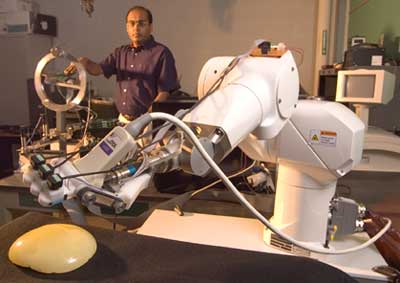
Physicians from MSU’s Department of Surgery are teaming with researchers in the College of Engineering to develop a robotic device that can check for lumps and other abnormalities in a woman’s breast and, at the same time, get an ultrasound image.

Here’s how it will work: A physician or other health-care provider, located in a hospital or clinic, will slip his or her hand into a glove-like instrument. That will allow him or her to move the robotic arm that is with the patient in a remote location.


“That arm, which actually looks like a hand, is equipped with sensors,” said Carol Slomski, chairperson of MSU’s Department of Surgery and co-director of the project. “As the hand touches the patient, the sensation from this touch comes back into my hand. When the robotic fingers feel a lump or some other abnormality, I also feel it.”

“Often the ultrasound and exam are done separately. But if the physician can look at the image and feel what he or she is seeing, it’s a huge advantage.”

Slomski said that with a potential shortage of surgeons looming, especially those located in more remote areas, technology such as this will make life easier for both patient and health-care provider.

MSU Today

Labels: ,

Lab Robots Help Hospital

NUH, Tan Tock Seng Hospital labs to automate with robotic technology
By Julia Ng, Channel NewsAsia

SINGAPORE: By year's end, you wouldn't have to wait long to get your test results from the National University Hospital (NUH) and Tan Tock Seng Hospital (TTSH).

The two hospitals are automating their laboratories with robotic technology.

The automation - which costs $14m - will make these two labs the most sophisticated in the region, boasting the first automation line in the area to integrate chemistry, haematology, immunochemistry and coagulation tests.
The laboratories at NUH and TTSH handle over 5,000 samples every day, churning out the results between one and three hours.

Faster lab results mean patients now get their test reports in half the time.

The automation also relieves hospital staff of mundane administration work. - CNA/ir

Channelnewsasia.com

Labels:

Wednesday, May 25, 2005

Study: Heart Surgery Robots Are Worth the Cost

Dr. Jeffrey A. Morgan and his team at Columbia University in New York concluded that robotic technology did not significantly increase hospital cost. Adding these cost benefits to the improvement in patients' postoperative quality of life and quicker return to activity resulting from robotic surgery, the investment in this emerging technology could be justified.

While potential benefits of robotic technology include decreased morbidity and improved recovery, some have suggested a prohibitively high cost.

A recent study in Journal of Cardiac Surgery compared actual hospital costs of robotically assisted cardiac procedures with conventional techniques. The research looked at financial data of 20 patients who underwent two different cardiac procedures using robotic and conventional approaches. It was determined that although actual hospital cost to conduct the procedure was not higher, when considering the capital investment for the robot, costs were just $300.00 higher.

Is robotic technology reducing health care costs for cardiac patients?

Labels:

Tuesday, May 17, 2005

ICU Rx Robot Avatar Success

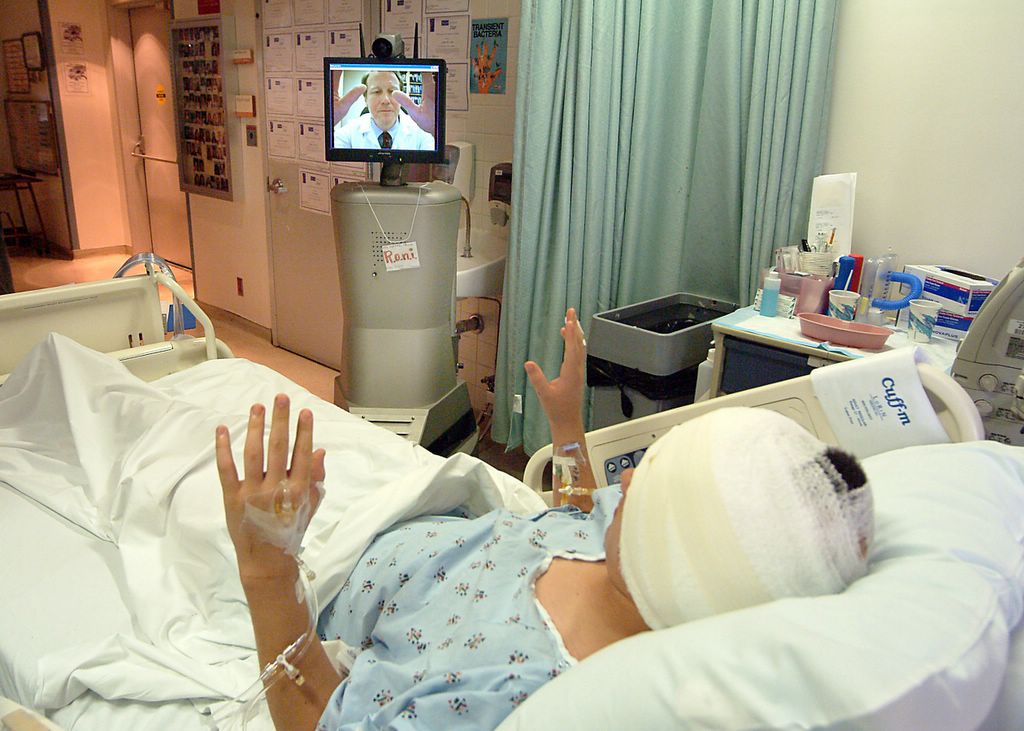
It looks like the introduction of the Robot avatar, Roni, into the intensive care unit of the UCLA hospital back in March is going well.
The unit is an RP-6 from inTouch Health.


CBS 5: Robot Doctors in the ICU

May 16, 2005 5:03 pm US/Pacific
A robot doctor has become a valuable member of the neurosurgery intensive care unit at UCLA.

Roni is a five-foot, six-inch tall robot who makes bedside visits with a twist. The patient sees, hears, and interacts with their doctor through this life-size robot, and that means the doctor can see first hand how the patient is doing.
But there's an alarming shortage of ICU doctors across the country. Fewer than 6000 specialists practice in America today, and more than 5 million patients are admitted to ICUs every year.
The robot is equipped with a monitor and a video camera, so the specialists can see and interact with the patient in real time from a remote location.
"Talking to the doctor in terms of the robot -- it almost seemed like he was right there," said Timothy Copeland.

Roni

That may be the most important part of robo-doc. It lets you connect with your doctors when you need them the most.


CBS 5: Robot Doctors in the ICU

Labels: ,

Wednesday, May 11, 2005

Robotic Baby Seal for Elderly

This robot seal has been used for human therapy since 2003. It has been named the "world's most theraputic robot" by Guiness book of records.

PARO


Robot seal there to be petted
11 May 2005

A Japanese robot designed to replace household pets has been given the seal of approval by Christchurch's [New Zealand] elderly.

The world's first robotic seal, nicknamed Paro, visited a Christchurch resthome yesterday and was greeted with great enthusiasm.

The cat-sized robot was designed at a cost of $15 million to take the place of pets in Japan where many people were unable to keep animals in their apartments, inventor Takanori Shibata said.


PARO had sensors all over its body, moved when stroked and made the same noise as real seal pups, he said.

A Japanese university study found stroking Paro's thick fur had a powerful positive effect on the elderly and those in hospital who were often deprived of contact with furry creatures, Shibata said.

During the 12 years it took for Shibata to design Paro he visited the Canadian ice fields and recorded seal noises and videotaped the way the animals moved.

Before deciding to design a robotic seal, Shibata made cat and dog robot prototypes. But he found people's expectations of the domestic animals were too high because they had experienced them before.

Shibata said he finally decided on making a seal robot because they were small, cute, had soft fur and were a novelty.

Four hundred Paro robots had been sold in Japan since going on the market at the beginning of this year, Shibata said.


STUFF New Zealand's leading news and information website

Labels: